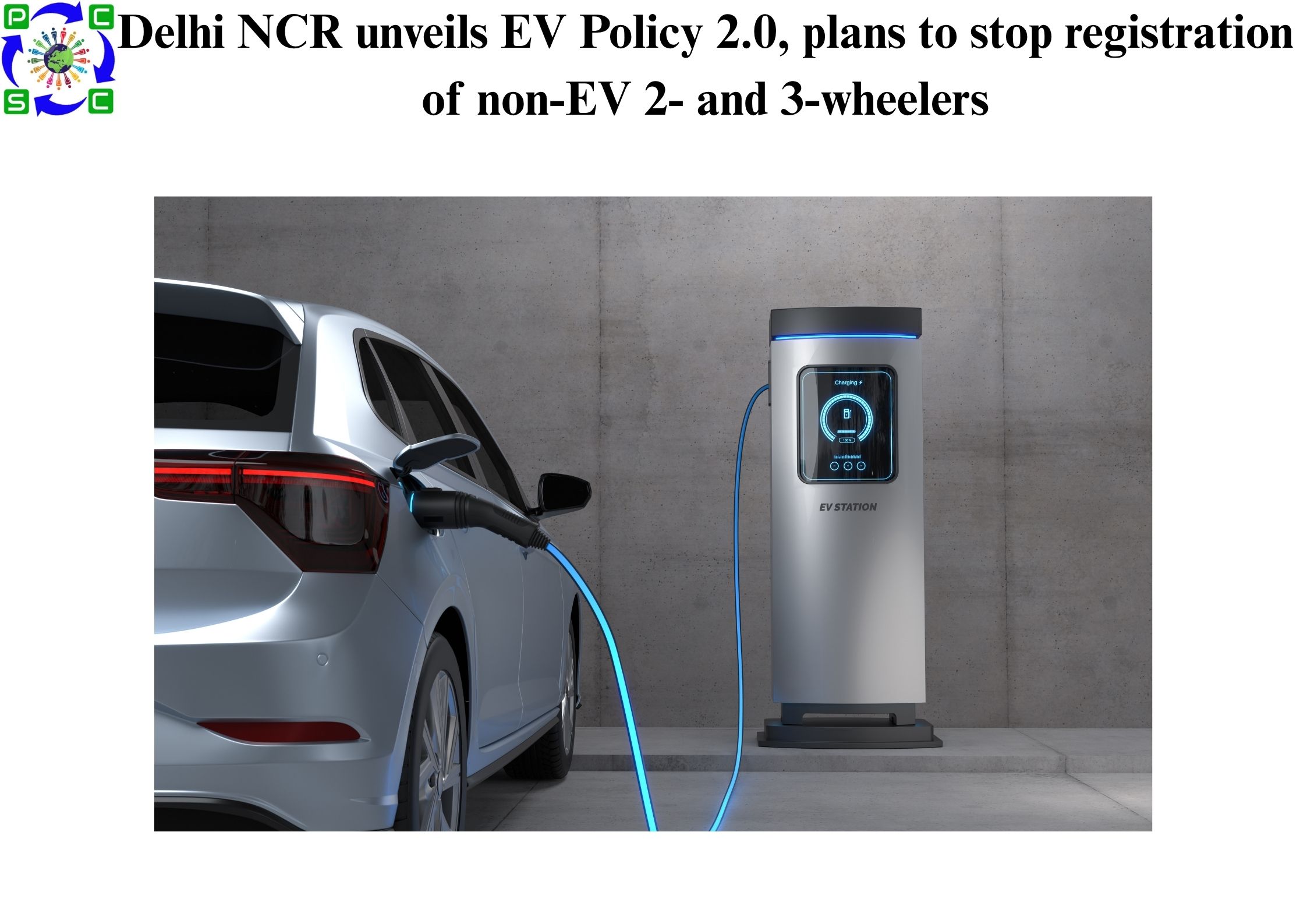
Delhi’s air pollution crisis persists year after year, with grey skies and rising pollution levels forcing people indoors. ICE vehicle emissions contribute nearly 23% of the problem, with two-wheelers alone accounting for around 67% of vehicular pollution.
To address this growing concern, the Government of NCT of Delhi has introduced the Draft Delhi EV Policy 2.0—a bold step toward cleaner mobility.
What’s New?
In April, 2026, the government released the Draft Delhi Electric Vehicle Policy (2026–2030), a comprehensive roadmap aimed at electrifying Delhi’s transport system, improving air quality, and positioning the city as a global EV leader. The draft is currently open for public feedback for 30 days.
What is EV Policy 2.0?
Delhi EV Policy 2.0 is a strategic initiative to accelerate electric vehicle adoption by making EVs more affordable, accessible, and practical. It combines financial incentives, tax benefits, phased targets, and infrastructure expansion to drive a large-scale transition to sustainable mobility.
Key Highlights & Timeline
-
2026: No new petrol/diesel/CNG two-wheelers or light goods vehicles allowed for aggregator platforms (e.g., ride-hailing, delivery services).
-
2027: Only electric three-wheelers (autos) to be newly registered.
-
2028: Registration of new petrol two-wheelers to be completely phased out.
-
2030:
-
100% electrification of new government vehicle purchases
-
30% of school bus fleets to go electric
-
Public transport fleets to adopt EVs
Segment-Wise Focus
Two-Wheelers:
A major focus area due to high pollution contribution. From April 2028, only electric two-wheelers will be registered. Delivery and logistics fleets must also transition to EVs.
Three-Wheelers:
From 2027 onwards, only electric auto-rickshaws will be registered, gradually replacing petrol and CNG autos.
Four-Wheelers:
Strong push for electrification of government fleets, commercial vehicles, and public transport systems.
Hybrid Vehicles:
Recognized as a transitional solution, with partial tax benefits to encourage gradual adoption.
Incentives & Financial Benefits
-
EVs up to ₹30 lakh: 100% waiver on road tax and registration fees
-
Hybrids up to ₹30 lakh: 50% road tax concession
-
Subsidies: Declining incentives over 3 years for 2W, 3W, and 4W segments
Charging Infrastructure
-
~18,000 public charging stations planned
-
Mandatory charging stations at EV dealerships
-
Battery swapping for commercial users
-
Single-window clearance for home charging
Impact on Businesses
-
Ride-hailing and delivery platforms must shift to EVs
-
No new fossil-fuel vehicles allowed in fleet operations from 2026
-
Government departments to procure only EVs (with limited exceptions)
The Bottom Line
Delhi EV Policy 2.0 is more than a regulatory update—it’s a decisive shift toward a cleaner, more sustainable future. With clear timelines, strong incentives, and infrastructure expansion, the capital is steadily moving toward an electric-first mobility ecosystem.