


 Authorised IMDS & CDX Training & Consulting partner for



 On May 13, 2025, Brazil’s Ministry of the Environment and Climate Change (MMA) released a draft implementing regulation for the Chemical Management Law (Brazil REACH), intended to operationalize Law No. 15,022 of November 13, 2024. The proposal establishes a National Inventory of Chemical Substances to oversee the registration, hazard identification, assessment, and management of chemicals, with the objective of reducing risks to human health and the environment.
Key Provisions
1. Registration System
· Registration Obligations Under Brazil REACH, chemical substances (including those in mixtures) that are produced or imported at ≥1 tonne per year (calculated on a three-year average) must be registered in the National Chemical Substance Registration System.
· Obligated parties include manufacturers, importers, and Only Representatives (appointed by foreign manufacturers).
1.2 Registration Content
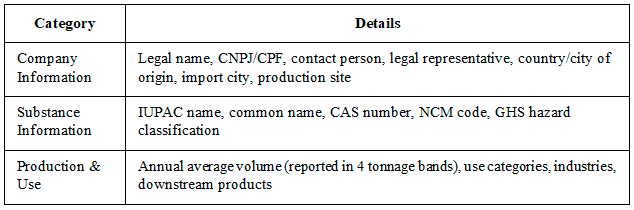
Key Provisions of Brazil REACH Draft Regulation
1. Registration System
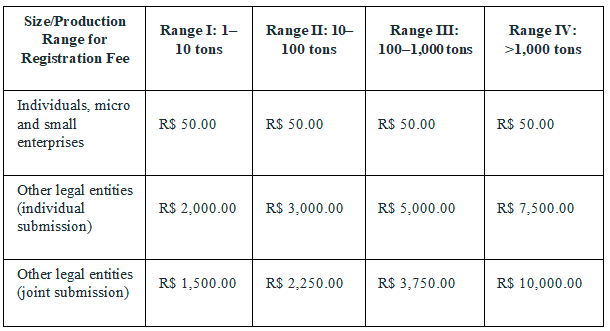
· Tonnage Bands (for fees and risk assessment):
o Range I: 1–10 tonnes/year
o Range II: 10–100 tonnes/year
o Range III: 100–1,000 tonnes/year
o Range IV: >1,000 tonnes/year
· Updates and Maintenance:
o Registration data must be updated annually by March 31.
o New substances must be registered before being placed on the market.
o Registrations will feed into and continuously update the National Chemical Inventory.
2. Prioritization and Risk Assessment
· Criteria: Prioritization is based on hazards (e.g., CMR, PBT properties) and exposure potential (e.g., volume, uses).
· Risk Assessments: Conducted by a technical committee using internationally recognized methodologies, considering health, environmental, social, economic, and technical factors.
· Public Participation: Draft risk assessments and proposed risk management measures will be open to public consultation.
3. Risk Management Measures
· Measures will specify mitigation actions, timelines, responsible parties, and transitional arrangements.
· Implementation is mandatory for manufacturers, importers, and downstream users.
4. Limitations on Animal Testing
· Animal testing is a last resort, with preference for alternatives (replace, reduce, refine).
· Existing animal data may be used, but new testing cannot be required solely for prioritization.
5. International Cooperation & Confidentiality
· International cooperation is encouraged to align with global chemical management practices.
· Confidential business information (CBI): Companies may apply for confidentiality, with justification and time limits. Authorities may lift CBI protections if public interest requires it.
6. Fee System
· Fees apply for:
o Registration (based on tonnage band).
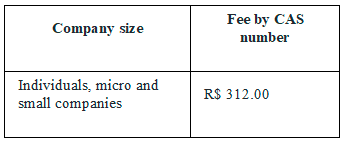
o Risk assessments (based on company size, volume, and joint submissions).
o Confidentiality reviews.
I. Annual registration fee
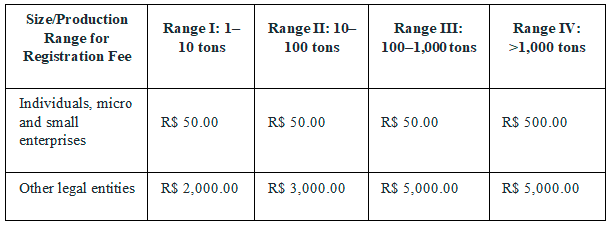
II. Risk assessment fee
III. Confidentiality analysis fee

IV. Payment deadline
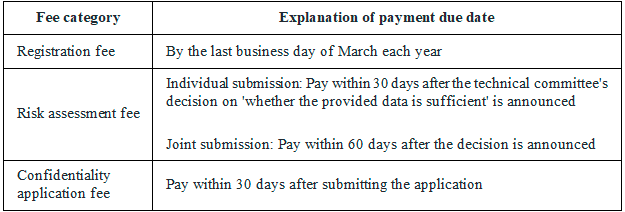
Note: All fees will be charged in Brazilian Real (R$). Registration fees will only be collected starting three years after the launch of the national registration system.
Stay ahead in sustainability compliance with Global PCCS —where expert insights meet the latest regulations. Unlock a future where compliance fuels sustainability, helping your business thrive in a greener, well-regulated world. For more information, contact us at info@globalpccs.com
