



 Authorised IMDS & CDX Training & Consulting partner for



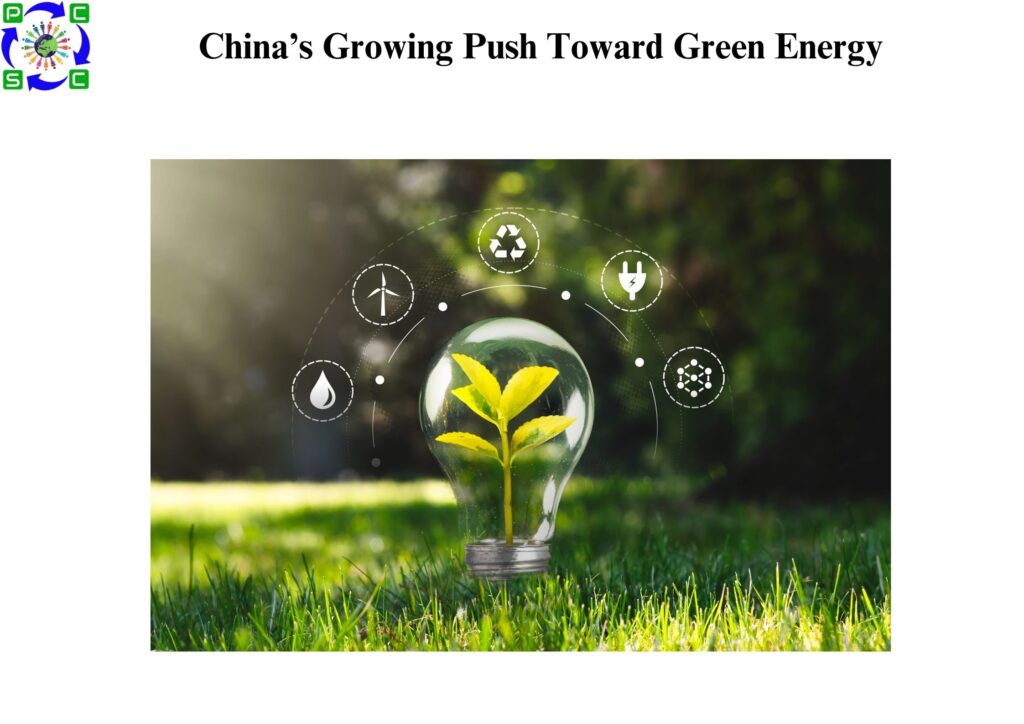 China is accelerating its transition toward a cleaner and more sustainable energy system, with green energy becoming an increasingly important part of its national energy strategy. The country is promoting renewable energy development, improving energy efficiency, and encouraging industries and businesses to reduce their dependence on conventional fossil fuels.
Expanding Renewable Energy
China has significantly expanded its renewable energy capacity, particularly in solar photovoltaic and wind power. The development of large-scale renewable energy projects is helping increase the share of clean electricity in the national energy mix while supporting the country’s broader climate objectives.
The government has also encouraged the development and deployment of emerging clean-energy technologies, including energy storage and other solutions that can support the integration of variable renewable energy into the electricity grid.
Supporting Green Electricity Consumption
Alongside increasing renewable generation, China is focusing on improving the consumption of green electricity. Businesses and other electricity users can increasingly participate in mechanisms that enable them to demonstrate the use of renewable electricity and support the development of additional renewable-energy capacity.
Green electricity mechanisms can therefore play an important role in helping companies reduce the emissions associated with their electricity consumption and strengthen their sustainability strategies.
Policy and Regulatory Support
Government policies and regulatory measures remain key drivers of China’s green-energy transition. These measures encourage renewable-energy investment, promote cleaner energy consumption, and support the gradual transformation of energy-intensive industries.
China’s approach combines renewable-energy deployment, market-based mechanisms, energy-efficiency improvements, and corporate participation to accelerate the shift toward a lower-carbon economy.
Implications for Businesses
For companies operating in China or sourcing products from Chinese manufacturers, the growth of green energy creates both opportunities and new considerations. Companies may increasingly need to evaluate the source of electricity used in their operations, renewable-energy procurement, energy-related emissions, and supporting documentation when preparing ESG, carbon-footprint, or supply-chain reports.
For multinational companies, understanding China’s green-energy policies can also be important when assessing Scope 2 emissions, Product Carbon Footprints (PCFs), supply-chain decarbonization, and broader climate commitments.
The Road Ahead
China’s continued expansion of green energy is expected to play a major role in its long-term transition toward a low-carbon economy. As renewable-energy capacity grows and mechanisms for green electricity consumption develop further, businesses will have greater opportunities to integrate clean energy into their decarbonization strategies.
Ultimately, China’s green-energy transition is not limited to increasing renewable-energy generation. It represents a broader transformation of energy production, consumption, markets, and corporate sustainability practices.
