



 Authorised IMDS & CDX Training & Consulting partner for




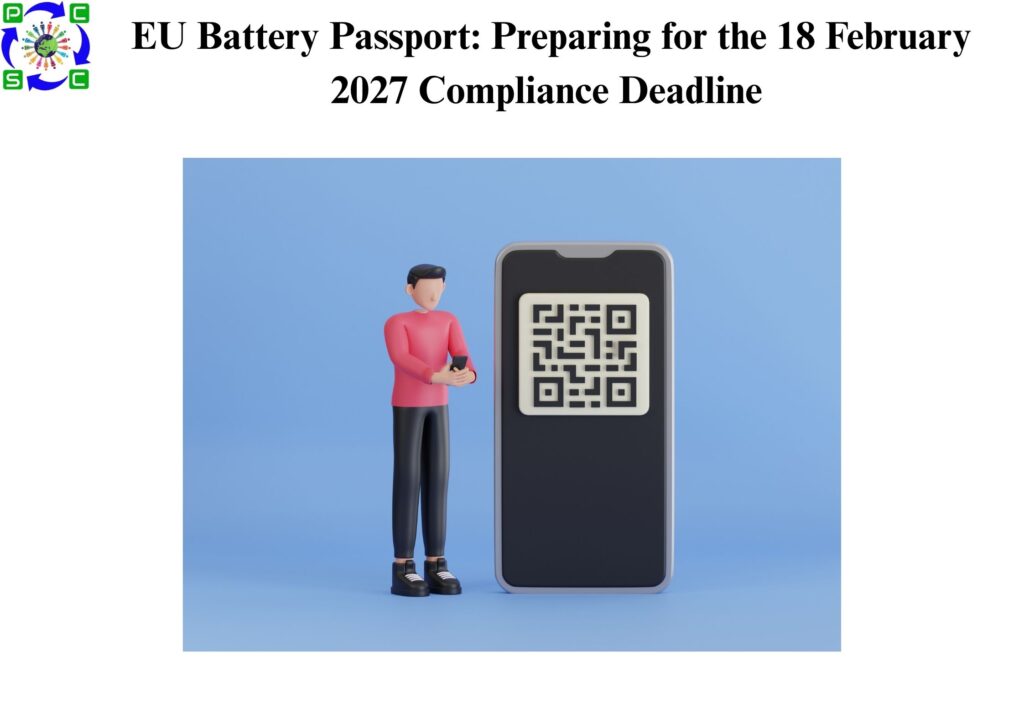
The European Union is approaching a significant regulatory milestone with the introduction of the Digital Battery Passport on 18 February 2027. Under the EU Batteries Regulation (EU) 2023/1542, the requirement will apply to electric vehicle batteries, light means of transport batteries, such as those used in e-bikes and e-scooters, and industrial batteries with a capacity exceeding 2 kWh that are placed on the EU market or put into service.
The Battery Passport aims to improve transparency, traceability and sustainability across the battery value chain by making relevant information accessible to manufacturers, consumers, repairers, recyclers, authorities and other authorised stakeholders.
What is the EU Battery Passport?
The Battery Passport is a digital record linked to a battery through a QR code. It provides information about the battery model and, where applicable, the individual battery, supporting better access to information throughout its lifecycle.
The information requirements cover relevant aspects of battery identification, composition, performance, durability, repair, reuse and recycling. Access to specific information will depend on the stakeholder’s role and the applicable regulatory access rights.
Who needs to prepare?
The primary responsibility for creating and maintaining the Battery Passport lies with the economic operator placing the finished battery on the EU market. This may include battery manufacturers and importers, depending on their role in the supply chain. The responsible operator may authorise another organisation in writing to manage the passport on its behalf.
Key steps for business readiness
Companies should begin preparing by:
- Assessing applicability: Identify the battery categories and products covered by the regulation.
- Mapping data requirements: Determine which information must be provided for each battery category and which data points apply from February 2027.
- Strengthening supply-chain traceability: Establish processes for collecting and validating information from suppliers and component manufacturers.
- Preparing digital systems: Ensure that battery information can be structured, maintained and linked to the relevant digital passport and QR code.
- Establishing data governance: Define responsibilities for data ownership, accuracy, updates and access permissions.
- Monitoring regulatory developments: Track further guidance and implementing acts to ensure that systems remain aligned with applicable requirements.
The European Commission has published guidance identifying the relevant Battery Passport data points and their applicability. Companies should note that not every data point or related obligation becomes mandatory at the February 2027 deadline; certain requirements, including those relating to carbon footprint, recycled content and due diligence, have separate application timelines.
Why does this matter?
The Battery Passport represents an important step towards greater transparency and circularity in the European battery market. For businesses supplying batteries to the EU, early preparation can help improve data quality, strengthen supply-chain collaboration and reduce the risk of last-minute compliance challenges.
If you’re looking for sustainability solutions tailored to your business needs, get in touch with us: Register now
