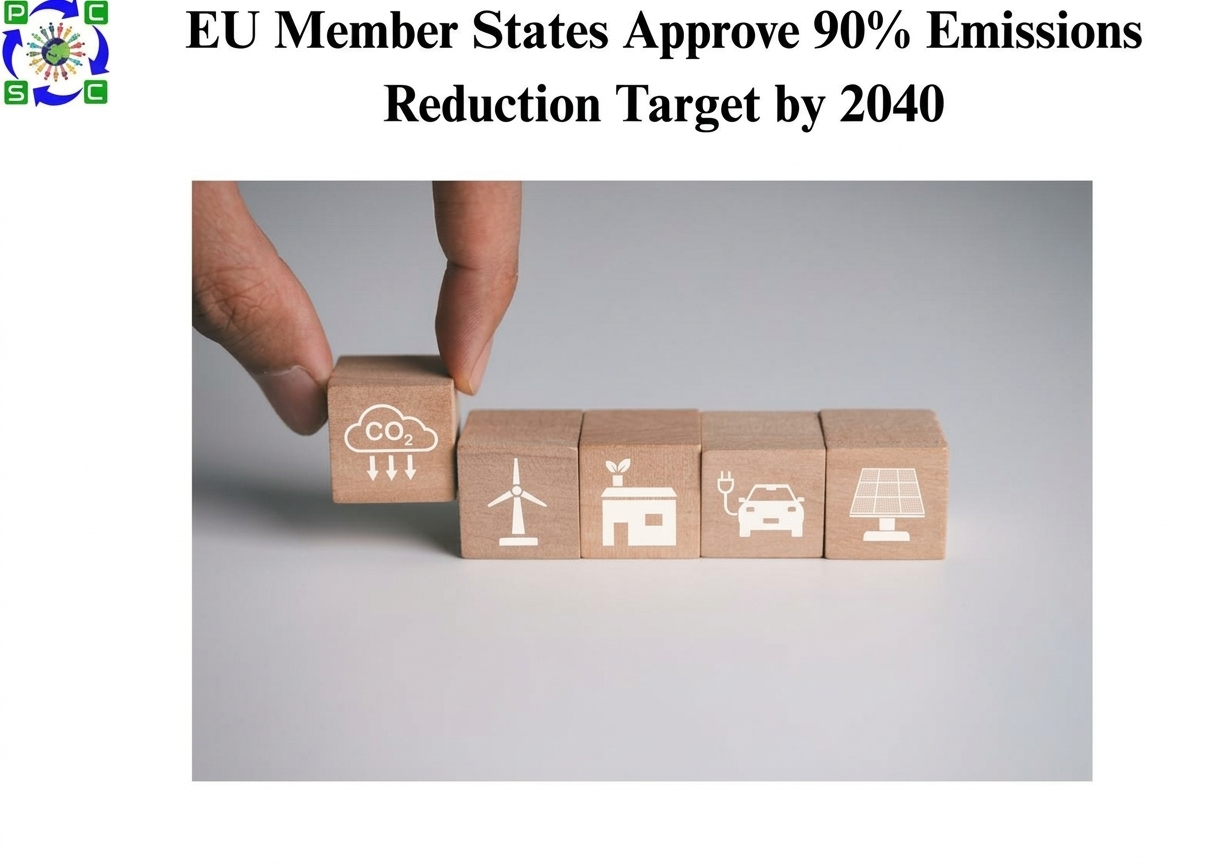
EU member states in the European Council voted to approve amendments to the EU Climate Law that require the bloc to cut greenhouse gas (GHG) emissions by 90% by 2040, while also allowing the use of carbon credits to help meet its climate targets.
This approval represents the final major step toward the formal adoption of the revised Climate Law, following the European Parliament’s approval of the amendments last month. The EU Climate Law was originally adopted in 2021, legally establishing the EU’s objective of achieving climate neutrality by 2050 and setting an interim target of reducing net GHG emissions by at least 55% by 2030 compared with 1990 levels.
To define the next interim milestone, the European Commission proposed amendments to the law in July 2025, introducing a new target to reduce GHG emissions by 90% by 2040. The proposal also allowed the use of international carbon credits under Article 6 of the Paris Agreement starting in 2036, contributing up to 3% toward the 90% reduction target.
However, reaching an agreement on the new target required the European Parliament and the Council to introduce additional flexibilities within the Climate Law. These include increasing the permitted use of international carbon credits to account for up to 5% of the required emissions reductions. The amended law also requires the European Commission to conduct reviews every two years, which may lead to adjustments to the target based on factors such as energy prices and technological developments.
Alongside the new climate target, the Council-approved amendments also include a one-year delay in the launch of the EU’s revised emissions trading system, ETS2, moving its implementation to 2028 instead of the originally planned 2027. ETS2 will expand the EU’s carbon pricing mechanism to additional sectors, including fuels used for road transport and heating buildings. The agreement between the Parliament and the Council also introduces further flexibility measures, enabling member states to offset shortfalls in emissions reductions across individual sectors to achieve overall climate objectives.
EU officials emphasized that the new target reinforces the bloc’s commitment to addressing climate change while maintaining economic competitiveness and supporting a fair transition. With approval now secured from both legislative bodies, the amended Climate Law will be published in the EU’s Official Journal and will come into force 20 days after publication.