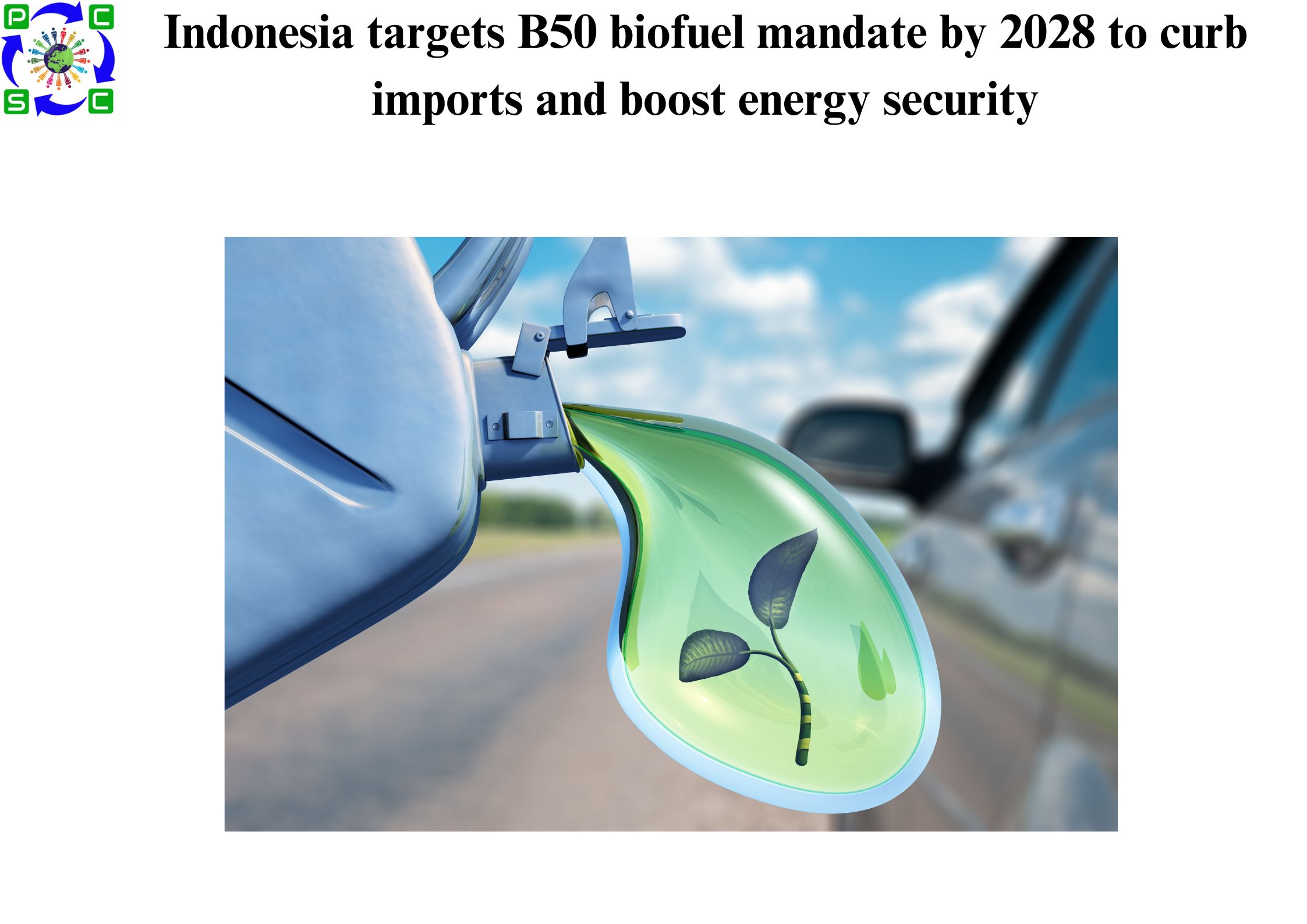
Indonesia has formalised one of the world’s most ambitious biofuel policies, mandating a 50% palm oil biodiesel blend (B50) across all diesel consumption by 2028. The move places bioenergy at the core of the country’s energy transition, aiming to reduce fuel imports, strengthen energy security, and expand domestic biofuel capacity.
Building on its existing biodiesel programme, Indonesia will first roll out a 40% blend (B40), with an accelerated transition pathway leading to full B50 adoption. Subsidised diesel is expected to reach B50 by 2027, while complete nationwide implementation will follow in 2028.
The strategy reflects both domestic priorities and global market dynamics, helping Indonesia reduce exposure to fuel price volatility and supply disruptions.
Beyond biodiesel, a broader biofuel push is underway:
-
Ethanol blending in gasoline will begin at 5%, increasing to 10% by 2028
-
Sustainable Aviation Fuel (SAF) mandates will be introduced from 2027 for key airports
Together, these measures position Indonesia as a regional leader in cross-sector biofuel deployment.
From an economic perspective, the policy supports energy independence, rural development, and emissions reduction, while creating long-term demand across the biofuel value chain. However, it also brings execution challenges, particularly around feedstock availability, land use, and sustainability compliance.
As the world’s largest palm oil producer, Indonesia’s approach will have significant global implications—shaping trade flows, influencing biofuel markets, and testing the balance between climate ambition and environmental safeguards.
By 2028, Indonesia’s B50 rollout is likely to serve as a critical benchmark for emerging economies pursuing energy transition pathways rooted in domestic resources.