


 Authorised IMDS & CDX Training & Consulting partner for


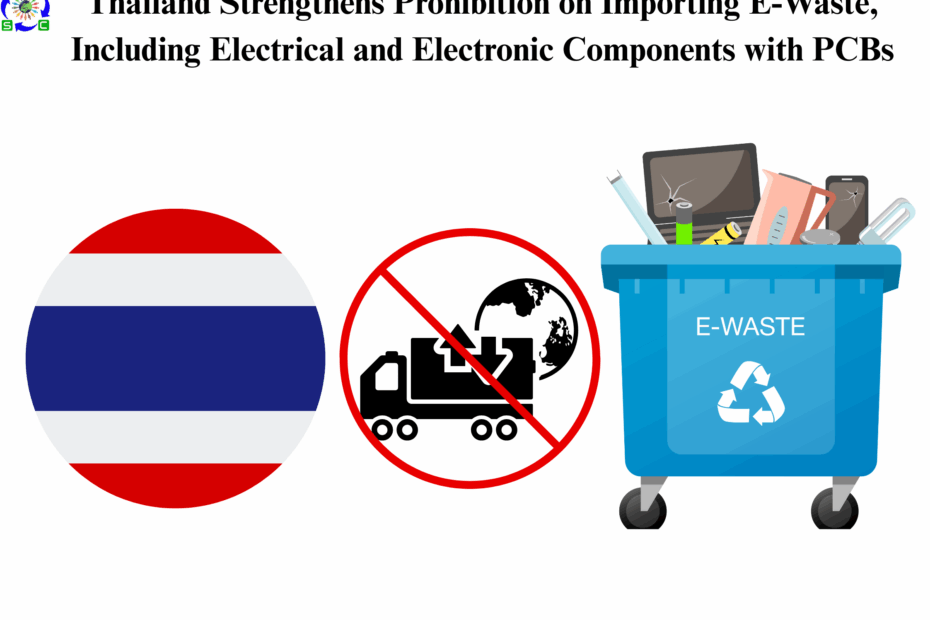
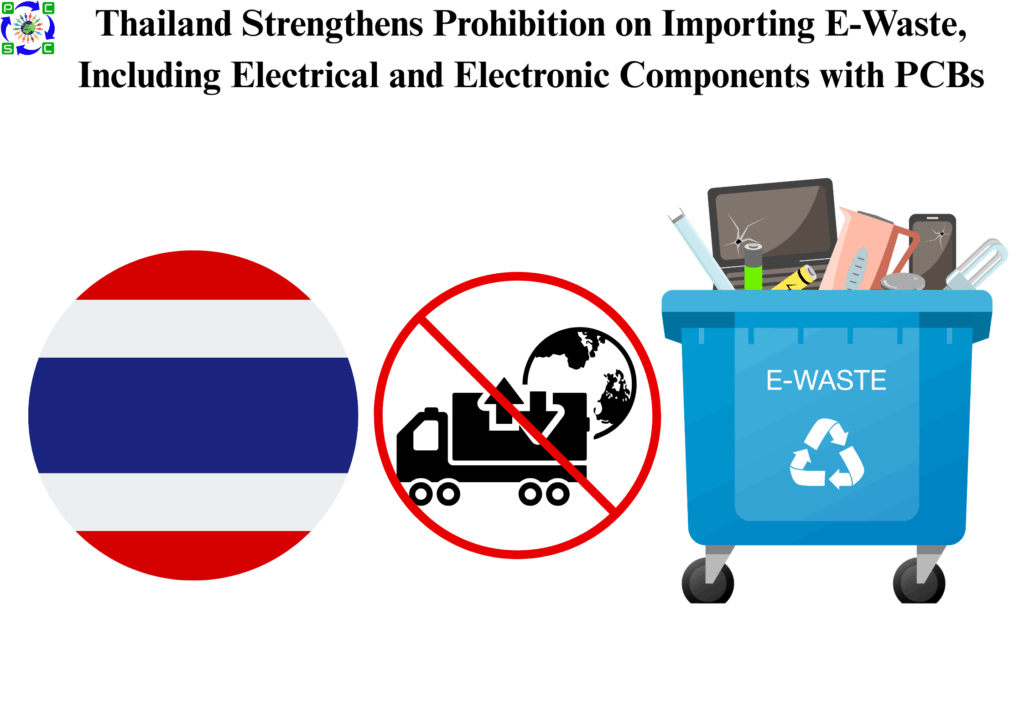 There are now 463 prohibited e-waste goods instead of just 428. Importing the e-waste listed in the MoC Notification 2025 is prohibited in Thailand.
Thai Ministry of Commerce (MoC) Notification on Classifying E-waste as Illegal for Admission into the Kingdom of Thailand B.E.2568 (2025) was released on June 23, 2025. It replaced the previous regulation, MoC Notification on Classifying E-waste as Illegal for Admission into the Kingdom of Thailand B.E.2563 (2020) and went into force immediately.
“Electrical and electronic assemblies or scrap (not included scrap from electric power generation) containing such as accumulators and other batteries, mercury-switches, glass from cathode-raytubes and other activated glasses and PCB-capacitors, or contaminated with Cadmium, Mercury, Lead, or Polychlorinated Biphenyl” is what the MoC notification defines as “e-waste.”
According to the Hazardous Substances Act (HSA) B.E.2535 (1992), this corresponds to Entry No. 2.18 in Sub-list 5.2 (Chemical Wastes) of Annex 5 to the List of Hazardous Substances B.E. 2556 (2013). Since the number of prohibited e-waste articles has expanded from 428 to 463, the MoC notice 2025 broadens the scope of the restriction on e-waste imports in comparison to the 2020 notice. Primary cells and batteries, printed circuit boards that could be used to extract precious metals in dangerous ways, electrical or electronic components that include lead, mercury, cadmium, or polychlorinated biphenyls (PCBs), etc. are now included in this expanded scope. The MoC Notification 2025 includes the most recent list of prohibited e-waste.
Next steps
Entry No. 2.18 in Sub-list 5.2 (Chemical Wastes) is currently categorized by HSA as a Type 3 hazardous chemical, meaning that it requires a Hazardous chemical Permit for the relevant actions (such as import, export, and possession). Now, the import of such e-waste with dangerous residues is forbidden by the MoC Notification 2025. Perhaps Entry No. 2.18’s hazard type will be raised to Type 4 for complete prohibition.
Stay ahead in sustainability compliance with Global PCCS —where expert insights meet the latest regulations. Unlock a future where compliance fuels sustainability, helping your business thrive in a greener, well-regulated world. For more information, contact us at info@globalpccs.com
