



 Authorised IMDS & CDX Training & Consulting partner for



 The whole text of the GB 30000.30-2025 Specification for Classification and Labelling of Chemicals – Part 30: Desensitized Explosives was just released by the National Public Service Platform for Standard Information. A major step toward China’s close alignment with international standards around chemical hazard classification will be taken when this standard takes effect on July 1, 2026.
Background and Positioning of the Standard
GB/T 1.1-2020 Directives for standardization—Part 1: Rules for the form and drafting of standardizing documents—are closely followed in this work. It establishes the foundation for China’s chemical hazard information disclosure system by offering uniform technical specifications for the classification determination of desensitized explosives as Part 30 of the GB 30000 series standards. It works to strengthen the protection of people’s lives, property, and the environment while also encouraging China to adopt the Globally Harmonized System of Classification and Labelling of Chemicals (GHS), which was developed by the United Nations.
Technically Aligned with International Standards
Explicit Definition: Solid or liquid explosive materials or mixes that have had their explosive qualities suppressed by desensitization therapy are known as desensitized explosives. They don’t burn quickly or explode in large quantities. They do not fall under the category of explosives hazards. Both liquid and solid desensitized explosives fall under this category. The classification, reasoning behind the determination, and labeling for desensitized explosives are outlined in this publication. According to the UN GHS (10th Revised Edition), it pertains to the labeling and classification of desensitized explosives.
Classification Criteria
An explosive material that has undergone desensitization treatment is considered a desensitized explosive if it satisfies all of the following requirements and has an exothermic decomposition energy in the desensitized state of at least 300 J/g: -It doesn’t have pyrotechnic effects or realistic explosions. -It does not pose a risk of a mass explosion in accordance with GB/T 14372-2024 Tests 6(a) and 6(b).
Additionally, Test Series 2 and Test Series 3 results for GB/T 14372-2024 are negative. According to the burning rate test in GB/T 14372-2024, its corrected burning rate (Ac) is not more than 1200 kg/min, and it does not pose a risk of mass explosion. The stability of nitrocellulose will be assessed in accordance with GB/T 44184.
Stable nitrocellulose is classified as a desensitized explosive.
Four-Level Classification System
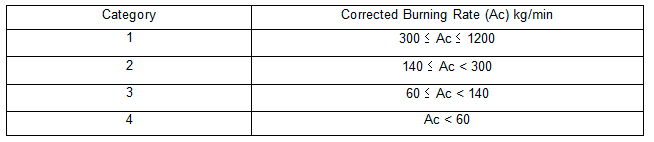
Desensitized explosives are categorized into four hazard categories based on their corrected burning rate (Ac), which is established by the burning rate test in GB/T 14372-2024, following packaging in accordance with supply and usage criteria.
Labelling Specifications
The product identifier, supplier identifier, hazard and precautionary remarks, pictogram, and signal word must all be included in the label information. The label must also contain other, as of yet unstandardized, label features, such as warnings about precautions. Additional information may be requested by regulatory bodies, and vendors may provide it.
Global Regulatory Alignment Status
In addition to Mainland China, the adoption status of desensitized explosives classification in other countries and regions is as follows:
· Chinese Taipei: On April 25, 2025, Chinese Taipei published the revised Classification and Labelling of Chemicals – General Principles (CNS 15030:2025), replacing the previous CNS 15030:2015 version. This fully implements UN GHS Rev. 8. The update introduced classification for desensitized explosives, with the corresponding standard being Classification and Labelling of Chemicals – Desensitized Explosives (CNS 15030-29:2025).
· EU: Adopted 4 sub-categories of desensitized explosives via the CLP Regulation (Classification, Labelling and Packaging).
· USA: On May 20, 2024, the US revised the Hazard Communication Standard (HCS), adding desensitized explosives classification with sub-categories 1-4.
· Japan: Published the updated JIS Z 7252:2019 on May 27, 2019. This update added desensitized explosives to the Japanese GHS classification.
· Brazil: Following the official implementation of ABNT NBR 14725:2023 on July 4 this year, desensitized explosives are classified into four sub-categories based on the corrected burning rate (Ac) from the UN Manual of Tests and Criteria.
· Singapore: Officially released revised versions of SS 586, Specification for Hazard Communication for Hazardous Chemicals and Dangerous Goods, on February 6, 2023, including SS 586-2:2022 and SS 586-3:2022, introducing “Desensitized Explosives” as a new physical hazard class.
· Australia: Since January 1, 2023, hazardous chemicals in Australia must be classified using GHS Rev. 7, which added desensitized explosives classification with sub-categories 1-4.
· Canada: Not adopted.
· Korea: Not adopted.
· Thailand: Not adopted.
Significance of Standard Implementation
All desensitized explosives categorized under the GHS system are covered by the technical content of this standard, which is in complete accordance with the UN GHS 10th Revised Edition. Establishing a scientific determination mechanism and standardizing the disclosure of hazard information will greatly improve China’s capacity to control chemical safety across the whole life cycle. It improves the preservation of the ecological environment and public health while offering linked sectors precise technical assistance.
Stay ahead in sustainability compliance with Global PCCS —where expert insights meet the latest regulations. Unlock a future where compliance fuels sustainability, helping your business thrive in a greener, well-regulated world. For more information, contact us at info@globalpccs.com
