


 Authorised IMDS & CDX Training & Consulting partner for



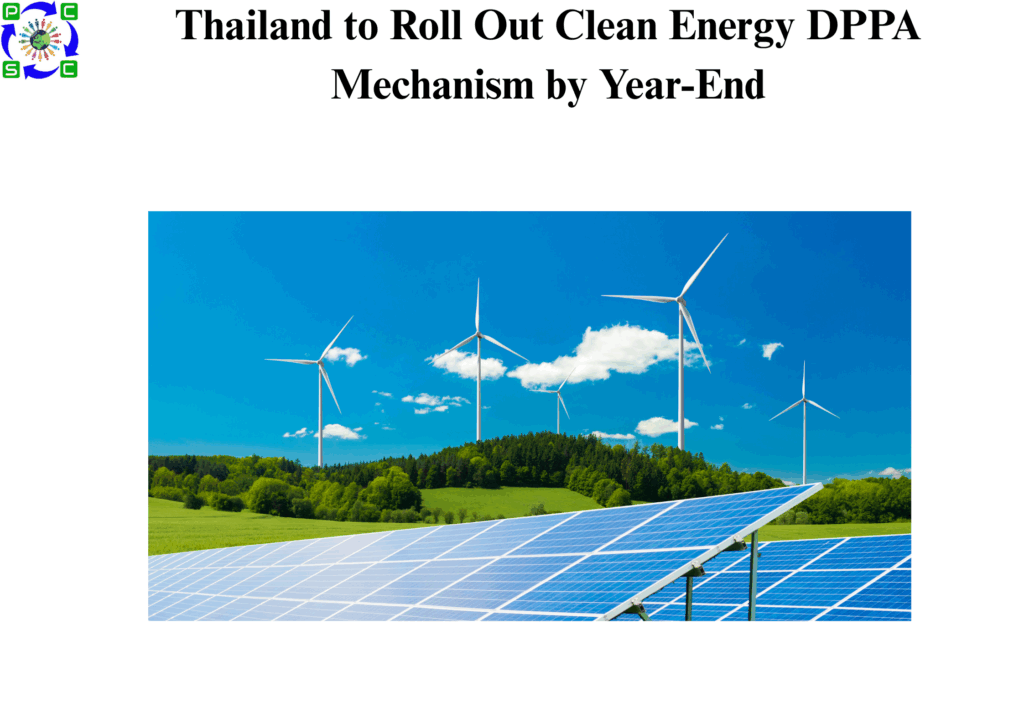 Thailand’s Energy Regulatory Commission (ERC) has announced that the country’s inaugural pilot project for the Direct Power Purchase Agreement (DPPA) is in its final review stages and is expected to launch by year-end. Authorities aim for the initiative to attract international data center developers to invest in Thailand. If industry uptake is strong, the ERC may consider lifting the current 2GW trading cap.
Third-Party Access Rules Under Discussion
ERC Secretary-General Poonpat Leesombatpiboon noted that officials from the Ministry of Energy and the Board of Investment (BOI) have been part of ongoing discussions, with the Third Party Access Code being a key topic. The ERC has clarified that if power companies use the national grid according to this code, associated transactions would incur wheeling charges.
As industries increasingly pursue low-carbon and net-zero objectives, the government faces growing pressure to liberalize the green electricity market. Foreign data center developers have indicated that a clear DPPA policy would influence their investment decisions. Currently, the National Energy Policy Council (NEPC) caps DPPA transactions at 2GW, but Poonpat suggested that this limit could be raised in the future to meet rising demand.
Decline in LNG Imports
Thailand’s electricity supply and demand remain closely linked to economic activity and weather patterns. Government data shows that as of July this year, gas-fired power generation fell by 12%—the largest decline on record—while liquefied natural gas (LNG) imports contracted for the first time since 2014. Natural gas still accounts for 56% of Thailand’s total power generation.
Economic Context and Long-Term Outlook
Meanwhile, the World Bank projects Thailand’s economic growth to slow to 1.8% this year and further to 1.7% next year, citing weak exports, slower-than-expected tourism recovery, and political instability. These factors are also dampening electricity demand.
Still, Poonpat expects long-term demand to rise, driven by transport electrification and the continued expansion of data centers.
Stay ahead in your compliance journey with smart, sustainable solutions from Global PCCS. For more insights and updates, visit us and power your progress with purpose.
