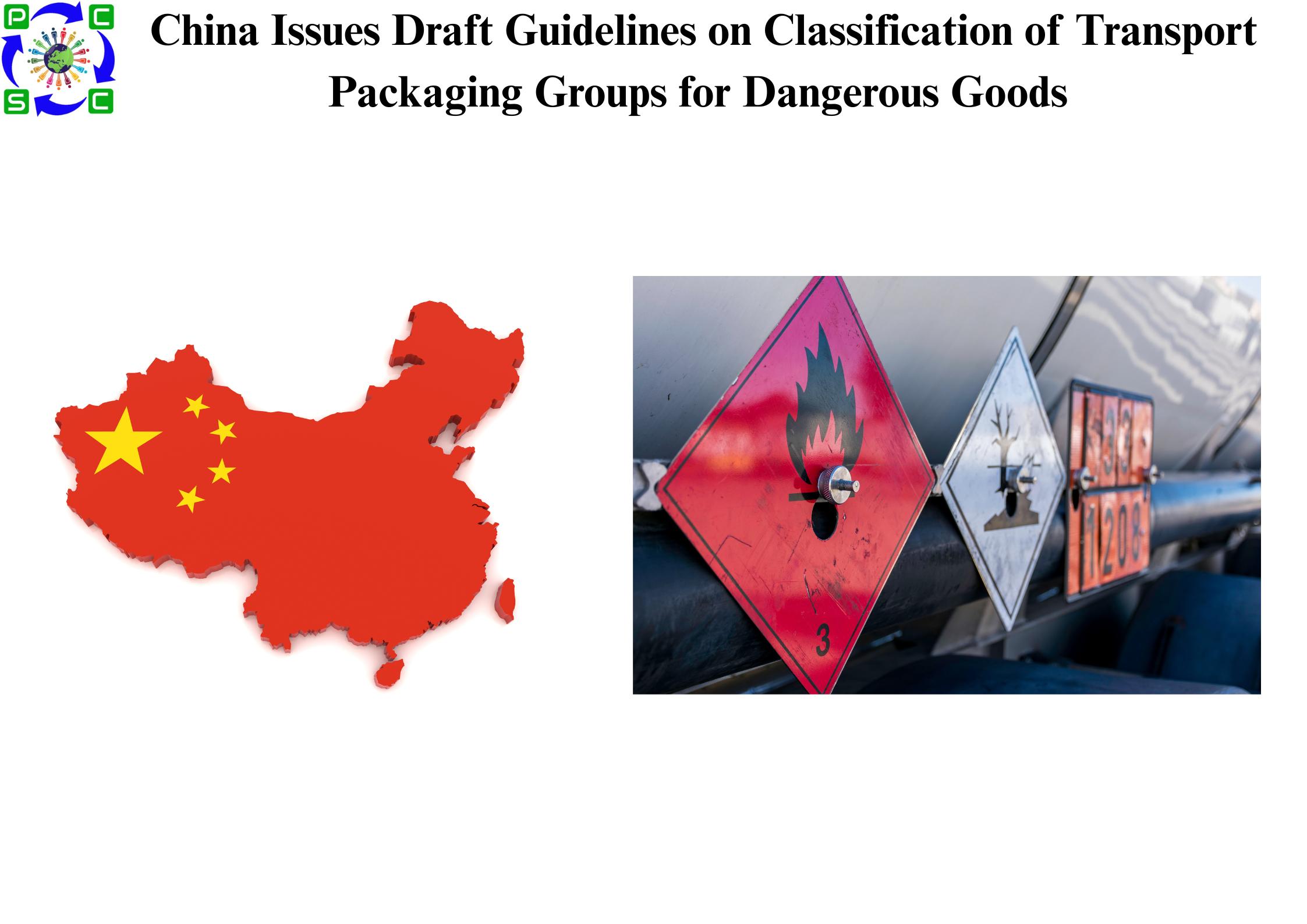
The revision of the recommended national standard Principle of Classification of Transport Packaging Groups of Dangerous Goods was formally launched on June 3, 2025, and the draft is currently open for public consultation. The two related standardization projects follow a 12-month timeline, with completion expected in 2026. The first draft for comments was completed and updated in January 2026. Jointly issued by the State Administration for Market Regulation and the Standardization Administration of China, the standard seeks to resolve the existing problem of unclear and inconsistent classification of packaging groups within China’s dangerous goods management system.
Scope
The standard outlines methods for classifying transport packaging groups for different types of dangerous goods. It is intended for use by departments involved in the production, storage, transport, and inspection of dangerous goods, providing a reference for determining packaging groups during packaging performance testing and inspections. However, it does not apply to gas pressure vessels, packaging for infectious or radioactive substances, packaging with a net mass above 400 kg, or containers with a capacity exceeding 450 L.
The document is technically aligned with the United Nations Recommendations on the Transport of Dangerous Goods – Model Regulations (24th revised edition).
Key Revisions
This draft replaces GB/T 15098—2008 Rule of Nomenclature for Dangerous Goods. Major technical updates compared with the 2008 version include:
-
Introduction of danger-based classification:
Except for Class 1, Class 2, Class 7, self-reactive substances under Division 4.1, Division 5.2, and Division 6.2, dangerous goods are classified into three packaging groups according to their hazard level:
-
Packaging Group I: High hazard
-
Packaging Group II: Medium hazard
-
Packaging Group III: Low hazard
-
Removal of CN-number-based classification:
The previous approach using CN numbers to determine packaging groups has been eliminated.
-
Deletion of class- and division-specific packaging group provisions.
-
Clarification for listed and unlisted substances:
For substances already included in GB 12268, packaging performance levels should be determined according to the specified packaging group. For substances not listed in GB 12268, the packaging group should be established based on the class/division and quantitative criteria provided in GB 6944.
-
Additional requirements for specific dangerous goods:
Transport packaging for articles must comply with the performance levels specified in the Model Regulations. Class 1 explosives must meet Packaging Group II standards. Outer packaging used for transporting pressure vessels must comply with the drop test requirements of Packaging Group I. Packaging for organic peroxides and self-reactive substances must also meet Packaging Group II performance criteria.
Transition Period
To allow stakeholders sufficient time to adapt to the updated requirements, a six-month transition period between the publication and effective dates is proposed, ensuring a smooth implementation of this recommended national standard.