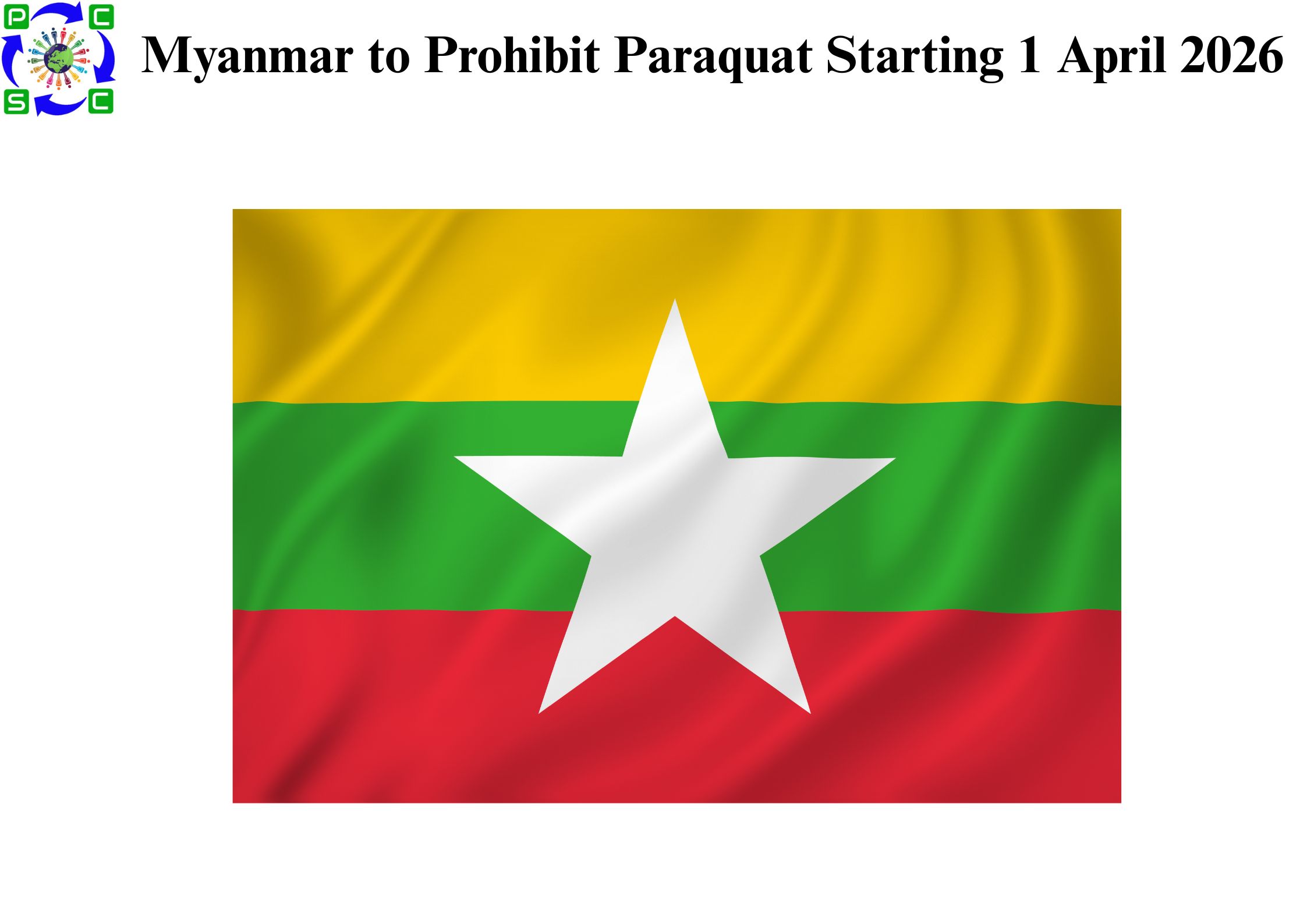
Myanmar has announced a nationwide ban on the highly toxic herbicide Paraquat, which will come into effect on 1 April 2026. The decision was made by the country’s Pesticide Registration Board due to growing concerns about the chemical’s serious risks to human health and the environment.
Under the new regulation, paraquat will no longer be allowed to be registered, imported, sold, formulated, repackaged, or used in Myanmar. Authorities have instructed pesticide distributors and retailers to withdraw and recall all existing stocks from the market before the ban takes effect. Any continued distribution or sale after 1 April will result in legal action under Myanmar’s pesticide laws.
Paraquat has long been considered one of the most hazardous herbicides used in agriculture. Scientific studies have linked exposure to the chemical with severe health impacts, including poisoning, organ damage, and neurological diseases such as Parkinson’s disease. Because of these risks, more than 70 countries worldwide, including many in Europe and Asia, have already banned or strictly restricted its use.
The ban is part of Myanmar’s broader effort to strengthen pesticide regulation and improve environmental and public health protection. In recent years, the country has also taken action against other hazardous pesticides, indicating a gradual tightening of chemical safety controls in the agricultural sector.